
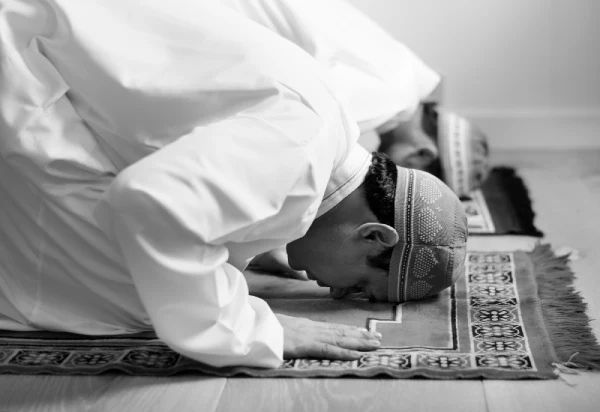
There is a particular kind of spiritual emptiness that comes from praying five times a day while being mentally and emotionally absent for all of them. You complete the physical movements, you fulfill the technical obligation, yet somehow the prayer that’s supposed to be the highlight of your day — the direct conversation with your Creator — feels like a burden you’re rushing to finish. A daily salah tracker isn’t about turning prayer into a productivity metric or reducing your relationship with Allah to a checkbox. It’s about creating structures that help you show up — not just physically, but with your full presence — and then sustaining that presence over weeks, months, and years until prayer truly becomes what it was meant to be: the anchor of your entire life. When approached with the right intention, using a prayer tracking system can be the beginning of reconnecting with prayer in a way that transforms not just your worship but your entire relationship with Allah.
Tools like Ajmal exist to support exactly this transformation — helping you build the consistency and intentionality that turn mechanical prayers into moments of genuine connection.
Why Improving Prayer Consistency Actually Matters
The five daily prayers are the second pillar of Islam — more important than charity, fasting, or Hajj. Yet many Muslims struggle with them in ways they wouldn’t dare admit publicly. Missing Fajr regularly. Combining prayers out of laziness rather than necessity. Praying so quickly that the words blur together. This isn’t about judgment — it’s about recognizing a reality that affects countless believers.
The Compound Effect of Daily Practice
The Prophet Muhammad (peace be upon him) said that the most beloved deeds to Allah are those done consistently, even if they’re small. This principle applies profoundly to prayer. One prayer prayed with presence and on time doesn’t transform your life. But thirty consecutive days of showing up build something. Three months create a pattern. Six months establishes a new identity: you become someone who prays, not someone who tries to pray.
This is where building a prayer habit becomes essential. Habits remove the need for constant willpower. When prayer is habitual, you don’t debate whether to pray Dhuhr — you just do, the same way you don’t debate whether to eat when you’re hungry. The tracking helps you see whether you’re actually building that habit or just wishing for it.
Awareness Before Change
You cannot fix patterns you refuse to see. Most people who struggle with prayer have vague awareness that ‘I’m not praying as much as I should’ but no clear picture of what’s actually happening. A prayer habit tracker makes the invisible visible. You discover that you’re consistent with Maghrib and Isha, but Fajr fails three times a week. You notice that weekday Dhuhr gets skipped, but weekend prayers are fine. These specifics matter because they reveal the actual obstacles rather than vague spiritual inadequacy.
Once you know the pattern, you can address it. Fajr struggles might need an earlier bedtime or a louder alarm. Dhuhr gaps might require blocking time in your work calendar. You’re not working on ‘being better at prayer’ — you’re solving specific, concrete problems.
What to Actually Track in Your Daily Worship
The best digital prayer tracker or Islamic prayer tracker app captures more than just yes/no checkboxes. Prayer has multiple dimensions, and tracking across them gives you a fuller picture of your spiritual health.
Timeliness
Did you pray on time, or did you delay until the window was nearly closed? Praying Asr at 3 pm versus 5:30 pm represents different levels of prioritization. Both fulfill the obligation, but only one demonstrates that prayer genuinely structures your day rather than fitting into whatever gaps remain.
Tracking this reveals whether you’re treating prayer times as suggestions or as the actual framework around which everything else arranges itself. When you use a weekly planner app that integrates prayer times, you naturally structure your commitments around salah rather than squeezing salah into your commitments.
Presence and Quality
This is harder to quantify but arguably more important than quantity. After each prayer, honestly assess: was I present, distracted, or somewhere in between? Did I rush through, or did I give each ruk’ah the attention it deserves?
Over time, this self-assessment reveals patterns. You might notice that Fajr prayers have more presence than afternoon ones. Or that praying in the mosque generates better focus than praying at home. Or those days when you read the Quran before prayer lead to more meaningful salah. These correlations are valuable — they show you what actually helps versus what you assume should help.
Additional Prayers and Sunnah
Once you’ve established consistency with the five obligatory prayers, tracking can expand to sunnah prayers, witr, duha, and tahajjud. But trying to track everything from the beginning often leads to overwhelm and abandonment. Start with the foundation — consistent, on-time fard prayers — then build from there.
Building a Structured Prayer Routine That Lasts

Tracking is diagnostic — it shows you where you are. But transformation requires action based on what the data reveals. Here’s how to use tracking to build a sustainable prayer practice.
Start With One Prayer
If your current reality is that you’re inconsistent with all five prayers, don’t try to fix everything at once. Pick the one you’re most likely to succeed with — often Maghrib or Isha, since they’re less likely to conflict with work or school — and commit to praying that one on time every single day for thirty days.
Track just that one prayer. When you hit thirty consecutive days, the identity shift happens: you’re no longer someone trying to pray consistently, you’re someone who prays Maghrib on time. Period. Then add the next prayer.
This incremental approach feels slower but actually produces faster, more durable results than ambitious attempts to suddenly pray all five perfectly that collapse within a week.
Link Prayer to Existing Anchors
Habit formation research is clear: new behaviors stick better when connected to existing routines. Link Fajr to your morning alarm. Link Dhuhr to your lunch break. Link Asr to your afternoon coffee. Link Maghrib to sunset. Link Isha to your evening wind-down.
These connections create automatic triggers. When the existing behavior happens, your brain automatically cues the new one. This is far more reliable than trying to remember five separate times throughout the day.
Use Ramadan as a Reset
Ramadan creates natural conditions for strengthening daily worship. The collective focus, the altered schedule, the spiritual atmosphere — all of it supports prayer consistency in ways ordinary months don’t. Using a Ramadan prayer tracker during the blessed month helps you establish patterns you can then maintain afterward.
But here’s the key: identify before Ramadan ends which prayer practice you’ll carry forward. Maybe it’s consistent Fajr. Maybe it’s always praying sunnah with fard. Maybe it’s taking time for du’a after each prayer. Choose one, make it non-negotiable, and use a Ramadan tracker app to ensure you don’t lose momentum when Shawwal arrives.
Daily Prayer Accountability: The Missing Element
Tracking creates awareness and structure, but accountability creates follow-through. Most people who struggle with prayer consistency do so in isolation, telling no one about their struggles and having no one who checks on them.
The Power of Shared Commitment
When you tell someone you’re working on prayer consistency and permit them to ask about it, something shifts. The commitment becomes real in a way private intentions never quite achieve. You’re not just accountable to yourself — you’re accountable to someone who cares about your growth.
This doesn’t require formal structures or apps. It can be as simple as texting a friend each day, confirming you prayed Fajr on time. Or a weekly check-in with a family member about your prayer tracking data. The specific method matters less than the principle: you’ve made your struggle visible to someone who will lovingly hold you to your stated intentions.
Self-Accountability Through Review
Even without external accountability, regular self-review creates a form of internal accountability. Set aside ten minutes weekly to review your prayer tracking data. What went well? Where did you struggle? What patterns emerged? What needs to change next week?
This weekly pause prevents you from drifting for months without noticing. It turns raw data into actionable insight and keeps your prayer life something you’re actively shaping rather than passively experiencing.
When Tracking Reveals Difficult Truths
There will come a point — perhaps in your first week of tracking — when the data shows you something you’d rather not see. Maybe you’re only praying three out of five daily. Maybe you haven’t prayed Fajr on time in two months. Maybe your presence rating reveals that you’re going through motions without a genuine connection.
This moment is crucial. You can respond with shame and give up. Or you can respond with honesty and compassion: ‘This is where I actually am. Not where I wish I was, not where I should be, but where I am. Now, what’s one small step forward?’
From Shame to Strategy
Islam teaches us that Allah is Merciful and loves us when we turn back to Him, even if we’ve turned away a thousand times before. Your prayer tracker showing gaps isn’t evidence that you’re a bad Muslim — it’s information that helps you become a better one.
Instead of: ‘I’m terrible at Fajr and always will be,’ try: ‘I’ve missed Fajr fifteen times this month. What specific obstacle keeps causing this? Is it my bedtime? My alarm? My morning routine? How can I address that one obstacle?’
The shift from shame to strategy is the shift from paralysis to progress. Shame keeps you stuck. Strategy moves you forward.
Celebrating Small Wins
Tracking also reveals progress, and progress — even little progress — deserves recognition. You prayed Fajr on time five days this week, when last week it was only two? That’s worth celebrating. You increased your presence rating from mostly distracted to sometimes present? That matters.
These celebrations aren’t about pride or boasting. They’re about acknowledging that change is happening, that your effort is producing results, and that the path you’re on is taking you somewhere real.
Beyond the Tracker: What Numbers Can’t Capture
A daily salah tracker is a powerful tool, but it’s still just a tool. The goal isn’t perfect data — it’s a transformed relationship with prayer. There are dimensions of prayer life that no tracking system can capture, and remembering this keeps tracking in its proper place.
The Inner Dimension
You can track that you prayed, when you prayed, and even your subjective sense of presence. But you can’t track the moment in sajdah when tears came unexpectedly. You can’t track the peace that settled over you during a particular recitation. You can’t track the way a specific du’a seemed to unlock something in your heart.
These moments are prayer’s real fruit. The tracking serves them by helping you show up consistently, creating the conditions where these experiences become possible. But the experiences themselves transcend any measurement.
The Relationship Beyond Ritual
Ultimately, improving prayer consistency isn’t about prayer as an isolated ritual. It’s about deepening your relationship with Allah. The five daily prayers are structured opportunities for connection, but the relationship extends into all moments — the way you treat people, the choices you make, the thoughts you entertain, the gratitude or complaint that flavors your internal experience.
As your prayer practice strengthens through tracking and intentionality, you’ll likely notice changes in these other areas too. More patience in traffic. More awareness of Allah’s presence in ordinary moments. More natural inclination toward what pleases Him and away from what doesn’t. These changes are the real goal; the tracker just helps you get there.
Making Prayer Tracking Sustainable Long-Term
The biggest failure point with any tracking system is abandonment after a few weeks. Enthusiasm fades, tracking feels burdensome, and you quietly stop. Here’s how to avoid that.
Keep It Simple
Your tracking system should take under two minutes per day. If it’s more complex than that, you won’t maintain it. A simple spreadsheet works. A notes app works. A dedicated prayer tracking app works if it’s intuitive. What doesn’t work is elaborate systems that require ten minutes of data entry.
For each prayer, track three things: Did I pray it? Was it on time? How present was I (1-5 scale)? That’s it. Nine quick assessments per day that give you enough data to see patterns without becoming a burden.
Integrate With Existing Systems
Prayer tracking works better when it’s part of a broader life structure rather than a standalone activity. If you already do weekly planning, include prayer review in that time. If you journal, incorporate prayer reflections. If you have accountability partners for other goals, add prayer to those conversations.
This integration prevents prayer from being an isolated spiritual project and instead makes it visible as the foundation it’s meant to be — the thing around which everything else organizes.
From Obligation to Refuge
A daily salah tracker is not the goal — transformed prayer is. The tracking is scaffolding, temporary support that helps you build something permanent: a prayer life characterized by consistency, presence, and genuine connection. When prayer becomes the highlight of your day rather than an obligation you rush through, you’ve arrived at what it was always meant to be.
This transformation doesn’t happen overnight. It happens through showing up, day after day, sometimes with ease and sometimes through sheer determination. It happens through honest acknowledgment of where you actually are, not where you wish you were. It happens through small, consistent steps that compound over months and years into something profound.
If you’re looking for comprehensive support in building the kind of life where prayer naturally thrives — where your weekly planning, spiritual goals, relationship commitments, and personal wellbeing all work together rather than compete — explore Ajmal App. Built for Muslims who want to live with intention and faith, Ajmal provides the tools and frameworks that help you structure your entire life around what actually matters, with prayer at the center where it belongs.
May Allah accept every prayer you offer and grant you the consistency, presence, and joy in worship that turns obligation into refuge.